28 Educational YouTube Channels for Kids vs. MrBeast (2026)
The best educational YouTube channels for kids teach something your child can talk about, try or build afterwards. MrBeast is the opposite case: his videos are made to keep a viewer watching, and Common Sense Media finds no educational value in them. Many parents call this kind of content "brain rot"; that is a parents' word, not a medical term. Below are 28 channels that teach something a child can use, sorted into four age bands, each with what your child learns and a good first episode to watch together.
The list is only half of it. The other half: watch the first two episodes of any new channel with your child, talk, try one thing from the video, and only then approve it.
The short answer
- Ages 3–6: Numberblocks for early math, Art for Kids Hub to draw along.
- Ages 6–9: Science Max, a small experiment you can repeat at home.
- Ages 9–12: Mark Rober for engineering, TED-Ed for everything else.
- Ages 12+: Crash Course for school subjects, Veritasium for deep-dive science.
- The method: watch two episodes together, ask, try one thing, then approve the channel.
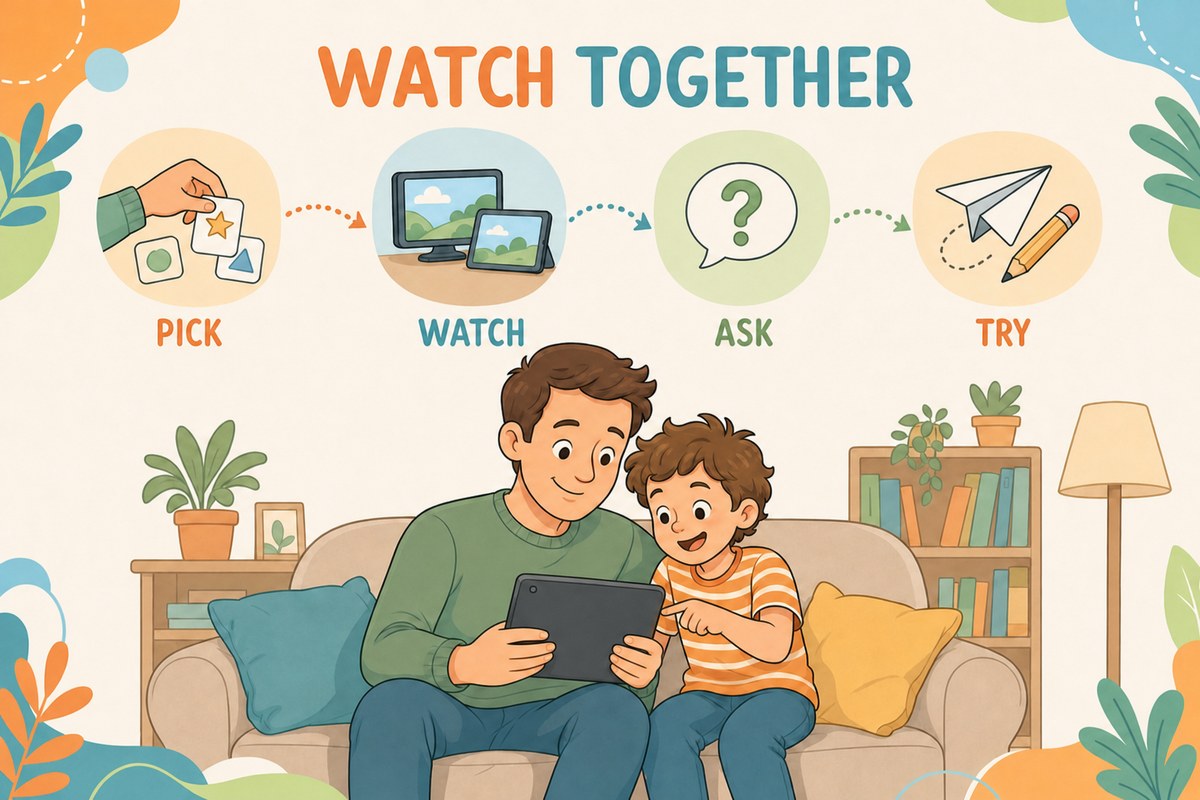
Why MrBeast Isn't the Same as Learning
MrBeast had 521 million subscribers as of October 2026 (his channel page). His recent titles show the formula: "Eat Everything In A Grocery Store, Win $1,000,000," "Survive 30 Days Chained To A Stranger, Win $250,000." A cash prize, a challenge, stakes that keep rising.
The videos are built for retention. In 2024 a 36-page internal guide, "How to Succeed in MrBeast Production," leaked, and Tubefilter covered it. Coverage calls it reportedly authentic; MrBeast's team did not confirm it. As reported, the guide says:
- "The first minute of each video is the most important minute of each video."
- "As you get deeper in the video the stakes get higher."
- The editing calls for "lots of quick scene changes and highly stimulating simple content."
- It plans a "3 minute re-engagement," and another at the six-minute mark.
- On the audience: "the average MrBeast viewer is a teenage memer that likes video games."
- The "wow factor" is "Anytime we do something that no other creator can do."
Nothing in that list is about what the viewer learns. It is about whether they keep watching. So if your child melts down when the video ends, they are not weak-willed; the videos are reportedly planned around re-engagement points at minutes 3 and 6.
The ratings say the same. Common Sense Media rates MrBeast 14+: "Big challenges, big prizes, can promote materialism." It finds "a high level of materialism and ad placement," notes that "videos consistently include sponsorships and product placements," and lists educational value as "Not present." To be fair, it also credits the channel with "positive messages such as generosity and kindness" through his charity videos. A kind host is still a host whose show runs on money, stakes and ads.
You don't have to ban him. You need something better to put on, and a way to make it stick.
The Method: Watch the First Two Episodes Together
This is the step most lists skip. Settings decide what can play; watching together tells you what a channel is actually like. The American Academy of Pediatrics says watching alongside kids "is the best way to know what they're consuming and how they're responding" (HealthyChildren.org). Its co-viewing guide adds that "Co-viewing and co-playing isn't the same as policing," and that it "can open a window into your child's online experiences in a context of sharing and trust."
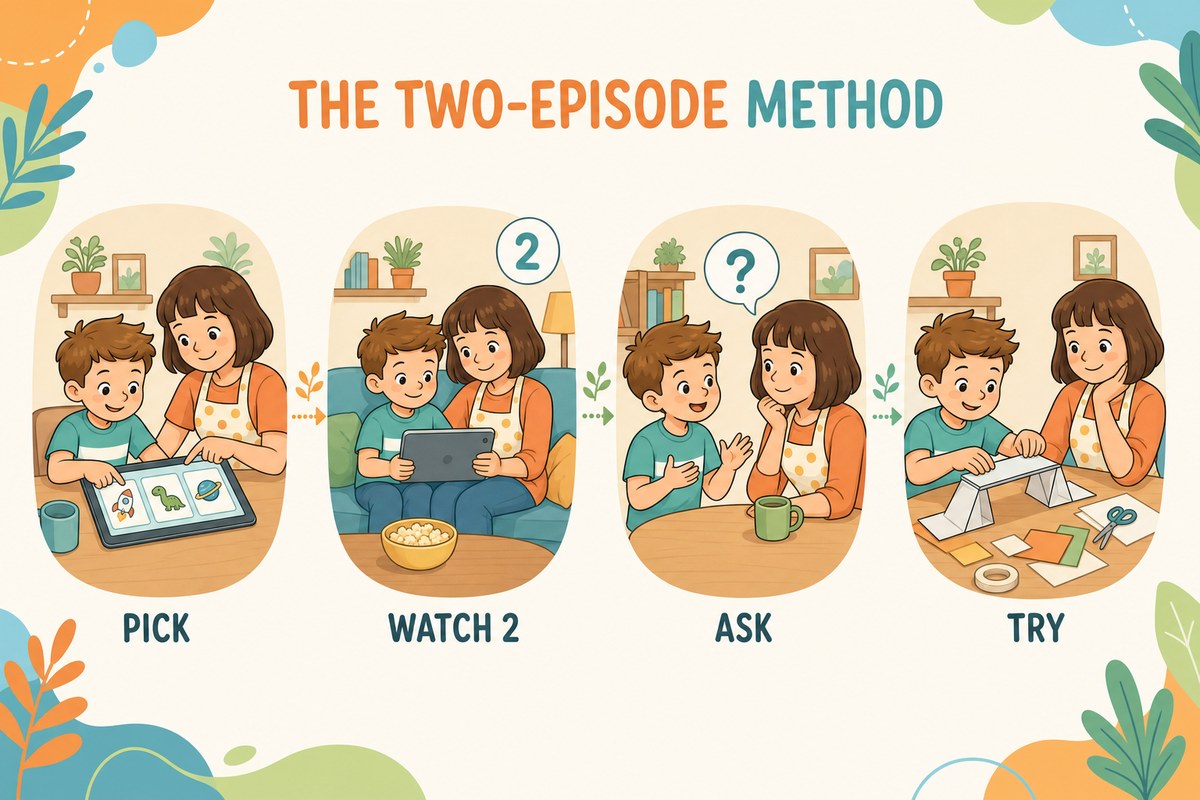
- Pick the channel together. Show your child two or three options from the tables below for their age and let them choose. The AAP's advice is to "Ask permission, especially with school-age kids," and kids are more willing to watch something they picked.
- Watch two episodes side by side. One episode can be a fluke; two tell you what the channel is like.
- Ask two or three questions afterwards. Keep them light: "What surprised you?" "Why do you think the bridge held?" "What would you change if you built it?" The AAP suggests you "Set fears and judgments aside (for now)." You're curious, not quizzing.
- Try one thing from the video. Repeat the small experiment, draw the drawing, build the paper version. This is where watching turns into doing.
- Only then add the channel to the approved list. If both episodes passed, approve it (setup steps below). If not, pick another together.
It costs one evening per channel. After that, your child watches alone a channel you have actually seen. The AAP also suggests you "Include co-viewing and co-playing in your family media plan."
Educational YouTube Channels for Kids by Age
Ages come from Common Sense Media or its Sensical lists where a rating exists, from the channel's own guidance where it states one, and say "our estimate" where neither does. Subscriber counts are as of October 2026. Each first episode is a real video picked because it leads to something you can try. For a longer reviewed list, Common Sense Media's YouTube reviews cover far more channels than we do; this page is the short list with a first episode to start from.
Find a channel by subject
- Math: Numberblocks, Khan Academy Kids, 3Blue1Brown
- Reading and language: Storyline Online, Ms Rachel, Crash Course Kids (Literature series)
- Science: SciShow Kids, Science Max, Mark Rober, Veritasium
- History and civics: TED-Ed, Crash Course (US Government)
- Art: Art for Kids Hub
- Movement: Cosmic Kids Yoga
Ages 3–6: Songs, Stories, Counting and Moving
Keep it short and shared. The AAP's 2016 guidance says to avoid screen media under 18 months except video chatting; our guide to screen time for babies and toddlers covers the early years.
| Channel | What your child learns | Good first episode to watch together | Age | Watch for |
|---|---|---|---|---|
| Ms Rachel 21.6M subscribers |
Speech and language through songs and simple lessons. | "Brush Your Teeth Song with Ms Rachel and Elmo," then brush teeth to it. | 2–4 (our estimate); Common Sense rates the Netflix version 2+ | Nothing flagged. |
| Sesame Street 30.4M subscribers |
Letters, numbers and getting along. | "Celebrate Halloween on Sesame Street! | FOUR Sesame Street Full Episodes." | About 2–5 (our estimate) | Compilations run long; stop after one. |
| Numberblocks 15.3M subscribers |
Early math: Common Sense says it makes "early math concepts fun." | "Learn to Count for Kids," then count blocks or spoons together. | 2+ (Common Sense) | Kids who can already count may get bored. |
| SciShow Kids 1.72M subscribers |
Short "why?" science with hosts Jessi, Mr. Brown and Squeaks the robot rat. | "Worms Are Wonderful," then go look under a rock. | 5–10 (Sensical) | New uploads have slowed; the 600-video archive still works. |
| Art for Kids Hub 10.6M subscribers |
Step-by-step drawing with a dad and his kids. | "How To Draw A Haunted School Bus," paper ready. | 4+ (Common Sense); 5–10 (Sensical) | Nothing flagged. |
| Khan Academy Kids 455K subscribers |
Read-alouds, early math and feelings lessons, many also in Spanish. | "Fractions for Kids (Halves & Fourths) with Shapes," then cut a sandwich into halves and fourths. | About 2–8 (the channel's own playlists) | Nothing we noticed; no Common Sense review yet. |
| PBS KIDS 3.76M subscribers |
Episodes from PBS KIDS shows, such as problem-solving with Lyla in the Loop. | "Lyla in the Loop FULL EPISODE | Lyla Can't Sleep / Hairdos and Hair Don'ts." | About 3–8 (our estimate) | Long compilations; pick a single episode. |
| Storyline Online 996K subscribers |
Picture books read aloud by actors, with the illustrations on screen. | "'The Most Magnificent Thing' read by Olivia Munn," then build your own magnificent thing. | About 3–8 (our estimate) | Nothing we noticed; no Common Sense review yet. |
| Cosmic Kids Yoga 1.98M subscribers |
Story-based yoga: kids do the poses while the host acts out an adventure. | "Kids Yoga for Beginners," done together on the living-room floor. | About 3–8 (our estimate) | Some adventures are themed on licensed characters. |
Ages 6–9: Science YouTube Channels for Kids
Every channel here has something you can repeat at the kitchen table.
| Channel | What your child learns | Good first episode to watch together | Age | Watch for |
|---|---|---|---|---|
| Science Max 560K subscribers |
Host Phil McCordic runs a small experiment, then scales it up. The TV series won three Canadian Screen Awards. | "This Pasta Bridge Can Hold a Human," then build a small pasta bridge. | 5–10 (Sensical) | Do the small version; the giant one is the show's job. |
| Wild Kratts 3.02M subscribers |
Animal behavior, habitats and adaptations, from the PBS series. | "All Creature Battles Part 1," then ask which animal would win and why. | 6+ (Common Sense); 5–7 (Sensical) | Nothing flagged. |
| Nat Geo Kids 2.07M subscribers |
Animals and planets, including the "Whoa Factor" shows. | "We Built a HUMAN-SIZED Wasps Nest," then look for a nest outside, from a distance. | 5–10 (Sensical) | Nothing flagged. |
| Mystery Science 1.04M subscribers |
Answers to kids' own questions from a K–5 science-curriculum company (formerly "Mystery Doug"). | "Could you walk around the world?" then measure how far you walk to school. | About 6–10 (our estimate) | Nothing flagged. |
| Crash Course Kids 971K subscribers |
Short science lessons, plus a Literature series added in 2025 for reading skills. | "What's an Engineer? Crash Course Kids #12.1." | 8–10 (Sensical) | The science episodes date from 2015; new uploads are irregular. |
| TheDadLab 5.13M subscribers |
Simple experiments and builds with things you already have. | "5 Easy Science Experiments Using Materials You Already Have On Hand." | About 4–9, done together (our estimate) | Some videos are sponsored ("#Ad," "from KiwiCo"). |
Ages 9–12: Engineering, Physics and Big Questions
These channels show how things work, and several show the failures on the way.
| Channel | What your child learns | Good first episode to watch together | Age | Watch for |
|---|---|---|---|---|
| Mark Rober 84.1M subscribers |
Engineering from a former NASA engineer: Common Sense calls it "science and engineering made fun." | "How to Escape Alcatraz With Basic Engineering," then sketch your own escape plan. | 8+ (Common Sense) | Mild profanity and explosions; one recent video is a $10,000 cash challenge, so pick the episode. |
| CrunchLabs 3.17M subscribers |
Mark Rober's kid-facing channel: engineering builds and "Engineers vs" contests. | "Engineers vs GIANT Egg Drop," then drop an egg in your own padded box. | 9+ for the Netflix show (Common Sense) | Rober "lays the promo on quite thick" for his build boxes (Common Sense). |
| TED-Ed 23M subscribers |
Animated lessons on science, history, riddles and money. | "Do we actually know how magnets work?" with a fridge magnet in hand. | 9+ (Common Sense) | Nothing flagged. |
| Steve Mould 3.62M subscribers |
Physics through surprising contraptions. | "The Anti Trampoline Effect," then drop a ball on a pillow and on the floor. | About 10+ (our estimate) | Nothing flagged. |
| SmarterEveryDay 11.9M subscribers |
Engineer Destin Sandlin asks "why" with high-speed cameras and field trips. | "Why Do Spinning Things Do This?" then spin a book in the air. | About 10+ (our estimate) | A few videos on economics and society. |
| Stuff Made Here 4.76M subscribers |
How an engineer works through failure: every attempt is shown. | "Baking brownies from the inside out," then list what failed and what he changed. | About 10+ (our estimate) | Power tools throughout. |
| Be Smart 5.89M subscribers |
Big science questions from Dr. Joe Hanson (PBS). | "Why Is Blue So Rare In Nature?" then hunt for blue things outside. | 10+ (Common Sense) | Common Sense flags "heavy ads"; a few mature topics. |
Ages 12+: Crash Course and Deep-Dive Science
These channels are made for a general audience, and the topics get heavier. With teens, watch one together, then let them tell you about the next.
| Channel | What your child learns | Good first episode to watch together | Age | Watch for |
|---|---|---|---|---|
| Crash Course 17.2M subscribers |
Full course-style series; Geology and US Government are running now. | "Why Does the US Only Have Two Major Parties?" (US Government #2). | 12+ (Common Sense) | Nothing flagged. Younger siblings: Crash Course Kids. |
| Veritasium 21.4M subscribers |
Derek Muller's deep dives into science and engineering. | "Is spider web really stronger than steel?" | About 12+ (our estimate) | Long videos; some World War II topics. |
| Kurzgesagt – In a Nutshell 25.7M subscribers |
Animated big-picture science. | "How Are Memories Stored Inside Your Brain?" | About 12+ (our estimate) | Existential, anxious themes in some videos, such as AI and death. |
| 3Blue1Brown 8.7M subscribers |
Math made visual, up to how neural networks work. | "But what is a neural network? | Deep learning chapter 1." | 13+ (our estimate) | Nothing flagged. Best for the math-curious. |
| Practical Engineering 4.84M subscribers |
How dams and power grids work, and what happens when they fail. | "The Mind-Blowing Flaw That Flooded New Orleans." | 12+ (our estimate) | Nothing flagged. |
| Tom Scott 6.75M subscribers |
Short documentaries about odd places and facts; back since March 2026 with Tom Scott: England. | "Why robots still can't pick strawberries." | 12+ (our estimate) | New episodes reach YouTube a week after Nebula. |
When to Be Careful
An educational label doesn't make every video fine for every kid.
- Stunts a kid might copy. Explosions and power tools are filmed by adults. Common Sense suggests asking: "How do you know if something is safe to try at home or not?" Chemistry channels such as NileRed are teen-only, never a project.
- Sponsored segments. CrunchLabs promotes its own build boxes, Be Smart carries "heavy ads," and some TheDadLab videos are marked "#Ad." Teach kids to name the ad when it starts.
- Fast, loud toddler channels. That's why Blippi isn't on our list. Common Sense rates it 4+ but says his "boundless excitement over EVERYTHING can wear on adult[s]," and some parent reviewers call it overstimulating. If your preschooler loves it, keep it short.
- Copycat handles. Some popular kids' channels have impostors with similar names. Use the links here, or check the subscriber count.
- When to talk to your pediatrician. A protest when the video ends is normal. Talk to your child's doctor if screen fights happen most days, if videos cut into sleep, school or friends, or if your child seems anxious or low after watching. The AAP's free Family Media Plan tool helps you write the house rules down.
How to Build a Channel Whitelist on YouTube
Once a channel passes, lock the list in. The AAP explains why: "Features like autoplay, endless scrolling and targeted ads aren't built with children's well-being in mind."
Under 9: YouTube Kids with "Approved content only"
- In YouTube Kids, use the Approved content only setting. With it, "your child can only watch videos, channels, and collections that you've handpicked," and they can't search (YouTube Kids Help).
- To set it up, turn on Approve content yourself, then tap the approval icon on each channel or video you want.
- Edit the list later under Manage.
The other YouTube Kids levels are Preschool (designed for kids 4 and under), Younger (ages 5–8) and Older (ages 9–12). Their filtering is automated, and YouTube asks parents to report anything that slips through (YouTube Help).
Ages 9–12: a supervised account on regular YouTube
Supervised kid accounts are for children under 13 and can't comment, upload or buy. The content settings were renamed; only the names changed (YouTube Help):
- Older kids (formerly Explore): "generally aligns with content ratings for viewers 9+."
- Teens (formerly Explore More): 13+.
- Older teens (formerly Most of YouTube): 16+, "almost everything on YouTube" except 18+ videos.
Age-restricted videos stay off for everyone under 18. Then, from your own account, go to Settings > Family Center (YouTube Help):
- Turn on Disable autoplay. Once it's on, your child can't switch autoplay back on.
- Set a Shorts feed limit, a daily cap that resets every morning.
- Block the specific channels you don't want, MrBeast included if that's your call.
- From your child's account, subscribe to the channels that passed, so they are easy to find.
For device-level time limits on top of this, see our guides to iPhone parental controls and Android screen time.
Make It a Family Habit
The two-episode test is once per channel; the try-it step is what keeps going. Put one line on the family's weekly list: "Watched one episode together + tried one thing from it." Weekly suits a 10-year-old; younger kids may want it daily.
Keep the AAP's screen-free times too: meals, bedrooms, the hour before bed. Our screen time limits by age guide maps them to device settings. If the fight is about stopping at all, see screen addiction in kids. Family Checklist (free for 3 family members) can hold it as a weekly item with a star for each tick.
Key Takeaways
- MrBeast's main rating concern is materialism; Common Sense Media finds no educational value.
- His videos are engineered for retention, according to a leaked production guide attributed to his company.
- Put on instead: Numberblocks and Art for Kids Hub (3–6), Science Max (6–9), Mark Rober and TED-Ed (9–12), Crash Course and Veritasium (12+).
- Watch two episodes together, ask, try one thing, then approve.
- Under 9, use YouTube Kids with Approved content only; at 9–12, a supervised account with Disable autoplay and a Shorts feed limit.
Frequently Asked Questions
Is MrBeast OK for kids, and from what age?
Common Sense Media rates MrBeast 14+, flags materialism and constant sponsorships, and lists educational value as "Not present," while crediting messages of generosity and kindness. A leaked production guide attributed to his company describes videos built to hold attention, with a planned "3 minute re-engagement."
What should my child watch instead of MrBeast?
Pick educational YouTube channels for kids by age: Numberblocks or Art for Kids Hub for 3 to 6, Science Max or Wild Kratts for 6 to 9, Mark Rober, CrunchLabs or TED-Ed for 9 to 12, and Crash Course or Veritasium for teens.
How do I make my kid watch educational videos?
Let them choose between two or three good channels, watch two episodes together, ask a few questions and try one thing. Then approve the channel, turn off autoplay and put "watched one episode together + tried one thing" on the family's weekly list.
What are good science YouTube channels for 6-year-olds?
SciShow Kids and Science Max are listed by Sensical for ages 5 to 10, and Common Sense rates Wild Kratts 6+. Nat Geo Kids, Mystery Science and TheDadLab also fit.
Are YouTube Kids' automatic filters enough?
Not on their own. YouTube says the Preschool, Younger and Older settings are filtered automatically and asks parents to report any video they believe is inappropriate. If you want to decide every channel yourself, use Approved content only.
How do I allow only certain channels on YouTube Kids?
Use the Approved content only setting: turn on Approve content yourself, then tap the approval icon on each channel or video. Your child can watch only what you picked and can't search.
Related Reading
Put "watch one episode together + try one thing" on the family board
Family Checklist shows everyone's tasks for the week on one board, with stars and streaks as kids tick things off. Free for 3 family members with 3 tasks each, and it prints a weekly chart for the fridge.

